A Contemplation on Finitude, Fear, and the Art of Being Mortal
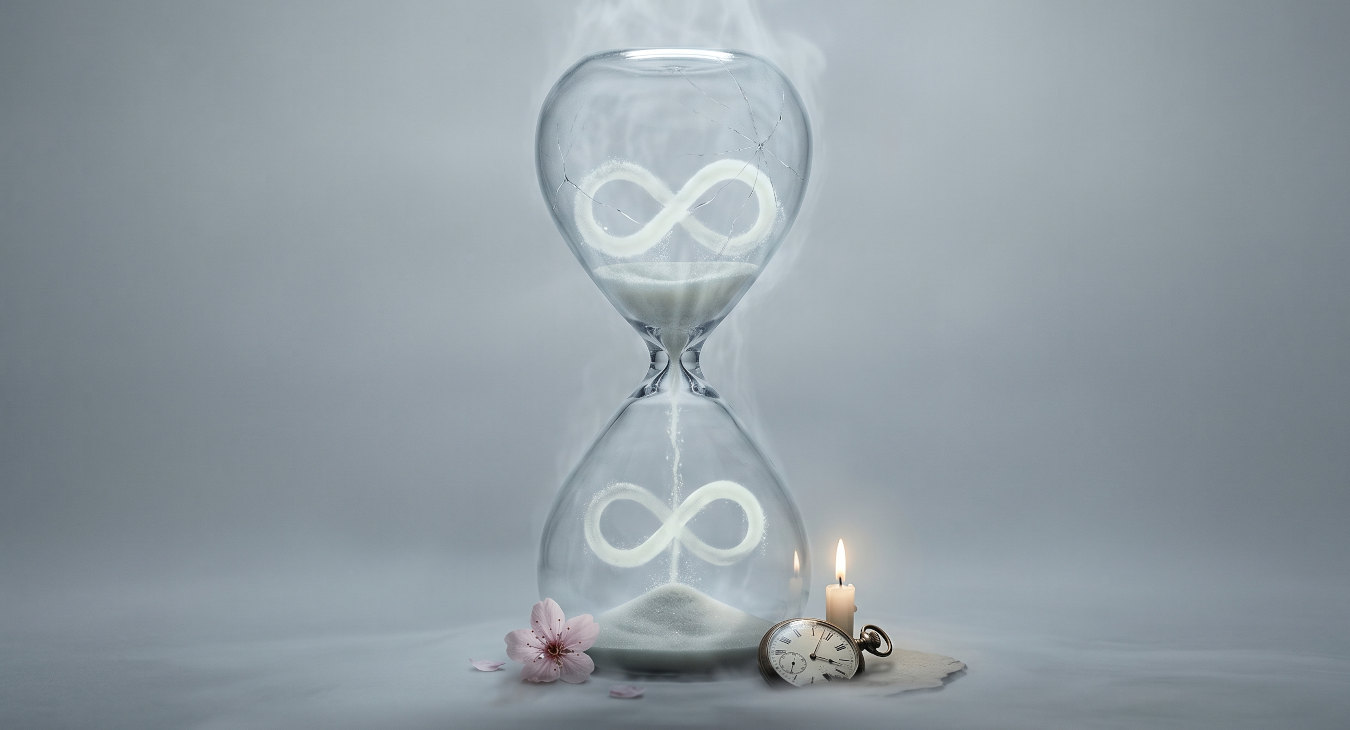
There is a peculiar ambition spreading through the corridors of Silicon Valley and the laboratories of cutting-edge biotechnology — the ambition not merely to live longer, but to live indefinitely. To conquer death itself. On the surface, this desire appears self-evident, even noble. What could be more natural than wanting to persist, to experience more, to avoid the darkness at the edge of every life? And yet, when we look more carefully, we may find that this ambition contains within it a profound philosophical confusion — one that mistakes the extension of existence for the deepening of it.
Before we can examine what is lost in the pursuit of immortality, it is worth pausing to understand what exactly is being pursued.
The Many Faces of the Immortality Project
The contemporary longevity movement is not one thing but many, a loose constellation of approaches united by a shared conviction: that aging is a problem to be solved, not a condition to be accepted.
Longevity Biotechnology represents perhaps the most grounded of these approaches. Organizations like the Lifespan Research Institute, formed in 2024 from a merger of SENS Research Foundation and LEAF, are working to slow, halt, and reverse the biological mechanisms of aging itself — cellular senescence, mitochondrial dysfunction, the accumulated damage that turns a young body old. The goal is not science fiction but an extension of what medicine has always done: push back the frontier of suffering and death.
Transhumanism goes further. It envisions not just longer biological lives but a qualitative transformation of what it means to be human — brain-computer interfaces, cognitive enhancement, the merging of biological and artificial intelligence. In this view, aging is merely the first limitation to overcome; our current cognitive and emotional capacities are a starting point, not a destination.
Mind Uploading and Digital Immortality occupy the most radical end of the spectrum. Thinkers like José Luis Cordeiro argue that within decades, it may be possible to upload human consciousness to the cloud, achieving a form of digital persistence that transcends biology entirely. "We will transcend the human condition," such voices claim, "once we become super-intelligent." Here, the body is shed like an old garment, and the self continues — or something calls itself the self — in silicon.
Cryonics takes a different bet: that if we cannot yet defeat death, we can at least pause it, freezing the body at the moment of clinical death in the hope that future science will restore it. It is immortality deferred, an act of faith in a technology not yet born.
Taken together, these movements represent one of the most ambitious projects in human history: the technological assault on mortality itself. And yet, for all their sophistication, they share a philosophical blind spot.
When Everything Becomes Available Anytime
The deepest problem with eternal life is not technical. It is existential.
Consider what gives a moment its weight. A sunset seen on the last evening of a journey. A conversation with someone we love, knowing we will be separated. A meal eaten at the edge of hunger. The birth of a child — which carries within it, from the very first moment, the knowledge that this new life is also mortal, that it, too, will pass. These experiences have their particular texture, their particular gravity, precisely because they are bounded. They end. And because they end, they matter.
The philosopher Martin Heidegger called this quality Sein-zum-Tode — Being-toward-death. For Heidegger, the awareness of our finitude is not a defect in human existence but its very source of meaning. It is death that makes each choice irreversible, each moment unrepeatable, and therefore real. We are not living vaguely in some general time; we are living this time, this afternoon, this breath — because we will not have unlimited afternoons.
Imagine the opposite. In a life without end, what would it mean to choose? Why read this book today, when there is always tomorrow, next century, ten thousand years from now? Why cherish this friendship with the urgency that love demands, when time has ceased to be a constraint? Why commit to this path, this place, this vocation — when all paths remain eternally open?
The paradox of eternal life is that it would drain meaning from the very experiences it promises to extend. Everything loses its urgency — and urgency, we forget, is not a burden. It is the pressure that turns carbon into diamond, the constraint that forces choice into significance. Remove it, and life becomes not more precious but less — a vast, featureless plain where everything is equally available, and therefore equally unimportant.
Buddhism has understood this for two and a half millennia. Impermanence — anicca — is not the enemy of a good life but one of its fundamental conditions. The cherry blossom is beautiful not in spite of its brevity but because of it. Its falling is not a tragedy appended to its blooming; the falling is the blooming, fully seen.
The Hubris of Godhood
There is another dimension to this ambition, one that the Western tradition has long recognized under the name of hubris — the overreaching of the mortal towards the divine.
C.S. Lewis anticipated this dynamic with unsettling precision in his prophetic work, The Abolition of Man. Lewis warned that humanity's relentless drive to "conquer nature" through technology would inevitably reach a fatal threshold: the point at which human nature itself becomes the raw material to be manipulated, engineered, and ultimately erased. It is the human ego attempting to build its own kingdom of heaven on earth through total technological mastery — entirely independent of the transcendent, entirely sovereign over the natural order. When we speak of uploading consciousness or editing out aging, we are no longer merely improving human life; we are, exactly as Lewis foresaw, attempting to abolish the human condition entirely.
This is the deepest transgression in Western cultural history: the creature usurping the role of the Creator. And it carries a paradox at its heart. A being with no limitations, no vulnerability, no dependency — no mortality — has ceased to experience life as a human being. In trying to become like gods, we risk engineering something with immense processing power but no soul. We become an artifact of our own making — a self-worshipping triumph of engineering that has successfully conquered nature, only to hollow out everything that made us worth saving in the first place.
This is not an argument from religious authority alone. The Stoics arrived at the same intuition from a different direction. What we cannot control, we can accept — and in genuine acceptance, not resignation, there is a dignity that no amount of technological mastery can purchase.
There is a final, bitter irony to this god-like ambition. In our frantic race to engineer an infinite future for the individual, we seem perfectly willing to ignore the exhausted, degrading reality of the world we actually inhabit. It is the ultimate hubris: demanding an eternity for ourselves while standing on a planet that is already buckling under the weight of our finite lifespans.
The Roots of the Project: Fear, Not Wisdom
The public rhetoric surrounding transhumanism is almost always framed as the ultimate expression of human courage, curiosity, and evolutionary destiny. It is painted as a bold frontier.
But if we peel back the layers of optimization data and biotech jargon, we must ask if this frantic rush to engineer an exit strategy from death is also driven by something more fragile: our oldest, most primal existential anxiety.
Because we can manipulate code and rewrite genetic sequences, we easily fall into the illusion that absolute control is possible. The drive to achieve immortality is fueled by a profound love for life, yet it is simultaneously haunted by the terror of losing it. There is a tragic irony at play here. In building an impregnable fortress against death to protect the asset of life, we risk stripping that very asset of its value through the Infinite Time Paradox. We risk locking ourselves inside a tomb of endless, meaningless time out of a refusal to sit with the vulnerability of being finite.
The great ambitions of our age are rarely as rational as they present themselves. The quest for eternal life, when examined honestly, looks less like a triumph of reason and more like an elaborate flight from existential terror — the fear of annihilation, of non-being, of the great absence that waits at the edge of every consciousness. The fear of death is among the most fundamental of human experiences. Existentialist thinkers from Kierkegaard to Heidegger have placed it at the very center of our psychological and spiritual lives. We build civilizations, in part, as monuments against oblivion. We have children. We write books. We try to leave something behind.
But there is a difference between acknowledging this fear and allowing it to dictate our relationship with reality. The philosopher who has done the deeper work — who has sat with the fact of death long enough to stop flinching from it — often discovers something unexpected on the other side: not despair, but a kind of liberation. When we stop running from finitude, we find ourselves, for the first time, fully here.
The meditation hall knows this. The hospice nurse knows this. The poet at the end of a long life knows this. The knowledge of death, far from being the ultimate problem, can be the ultimate teacher — the pressure that forces us into the present, the only place where life actually occurs.
An Unanswered Question
And yet — and here honesty demands we pause — the case is not entirely simple.
There are those who die too young, in pain, without having tasted anything of the life they might have lived. The child with cancer. The young person taken by accident. Is it not understandable — perhaps even right — to want to push back against this? Is not medicine itself a form of life extension, and have we not celebrated every year it has added?
The question is not whether life has value. Of course it does. The question is what kind of value, and whether extending its quantity necessarily deepens its quality — or whether, past a certain point, it begins to hollow it out.
Perhaps there is no final answer here. Perhaps the tension between the love of life and the acceptance of death is not a problem to be solved but a paradox to be inhabited — the defining paradox of being human.
The Greek philosopher Epicurus viewed a good life as a banquet. We sit at the table, we eat deeply of what is offered — the intense experiences, the profound relationships, the meaningful work — and when we are full, we graciously rise and leave the table so that another might take our seat.
The transhumanist ambition, driven by the fear of missing out, demands that we stay at the table forever. But for those who have lived intensely, who have not hidden from the vulnerability of the world, there comes a quiet, profound realization: enough is enough. To leave the table is not a tragedy; it is the natural, dignified conclusion to a meal well-savored.
Reclaiming the Sacred Boundary
When we look at the transhumanist dream in its entirety, we see a movement born of a beautiful, frantic love for existence, yet one that may be mistaking survival for living. A life without an end is a life stripped of its architecture.
The ambition to live forever views mortality as an engineering failure. But philosophy and religion remind us that mortality is not a design flaw. It is an existential boundary condition. It is the very matrix out of which meaning, beauty, and love are born.
To live a deeply human life is to live a finite one. It is precisely because our time is scarce that our choices matter. It is because our relationships are fragile that we hold onto them so tightly. And it is because our suffering has an ultimate floor that we can find the courage to endure it.
If we want to rescue life from the gray apathy of infinite tomorrows, we do not need to expand our lifespans into eternity. We need to deepen our relationship with the time we have. True freedom does not come from building an impregnable fortress against death, but from having the courage to step onto the canvas, accept its borders, and paint something beautiful within the frame.
There is a teaching in the Zen tradition: before enlightenment, chop wood, carry water. After enlightenment, chop wood, carry water. The actions remain. The world remains. Only the relationship to impermanence has changed.
What if we were to stop directing our enormous ingenuity toward the conquest of death, and instead turn it toward the art of living — fully, presently, gratefully — within the life we have? What if the shadow that finitude casts is not darkness, but the very thing that gives light its depth?
The question floats there, unanswered, like a last breath released into the autumn air.